.
.





Whether you’re a freelancer, first-time entrepreneur, or starting a side hustle, a limited liability company (LLC) can give your business a formal structure without the hassle of dealing with all the complex regulations corporations face. Plus, LLCs help protect your personal assets from business debts and offer more tax flexibility than other business entities.
An LLC in Wisconsin offers several advantages. The filing fees are relatively low, and the LLC formation process is straightforward. To form your business, simply register it with the state. You can do this yourself by following the steps below, or you can hire LegalZoom to handle the paperwork for you. Either way, let’s cover everything you need to know to start an LLC in Wisconsin, from state requirements to next-step compliance obligations.

Wisconsin LLC Registration at a Glance
- LLC registration fee: $130 (+ $1 to file online or + $15 to file a paper copy by mail) (free for qualifying students)
- General processing times: One to seven business days, depending on factors such as how you file and the time of year. You can opt for expedited processing for an additional $25.
- Registered agent: Required. You will need a registered agent that meets state qualifications to register an LLC in Wisconsin.
- Operating agreement: Not required, but highly recommended
- Annual report fee: $25
How to get an LLC in Wisconsin in 5 steps
You form a Wisconsin LLC by filing articles of organization with the Department of Financial Institutions (DFI). Or, file a foreign registration statement if you’d like to register an out-of-state business.
The DFI recommends you use their One Stop Business Portal to file online, but you can also mail in a paper copy if you prefer. However, there are a few things you should do before and after to help ensure the process goes smoothly and that you’ve set your LLC up for success.
Step 1: Name your Wisconsin LLC
Before you can register your LLC in Wisconsin, you’ll need to choose a unique business name to include in your articles of organization. Names must comply with Wisconsin’s naming requirements, including:
- Your business name must include the words “Limited Liability Company,” “Limited Company,” or the abbreviations of those words (with or without periods).
- The business name also can’t contain words used to name a government agency, like “FBI” or “Treasury,” as well as certain restricted words (“bank,” “lawyer,” “insurance,” and more) unless you’ve completed the additional documentation and licensure paperwork.
- Most importantly, your name must be different from an existing business in the state. You can use the Wisconsin Department of Financial Institutions Business Name Search Tool to perform a WI LLC lookup and check if the name you want is available. (We’ll perform the search for you if you launch your LLC through LegalZoom)
Free Wisconsin Business Name Check
Use our free name check tool to search the Wisconsin Secretary of State database and see if your business name is available.
By clicking "Check Availability," I agree to LegalZoom's Terms of Use. This search is a preliminary check of state databases and does not include variations or trademarks. Results do not guarantee name availability or compliance with legal requirements.
Similarly, if your business is a foreign LLC with a name that’s not available in Wisconsin, you can register a “doing business as” (DBA), also called a fictitious name in Wisconsin. This allows your LLC to operate under a name that’s different from the name written on its formation documents.
Step 2: Choose your registered agent
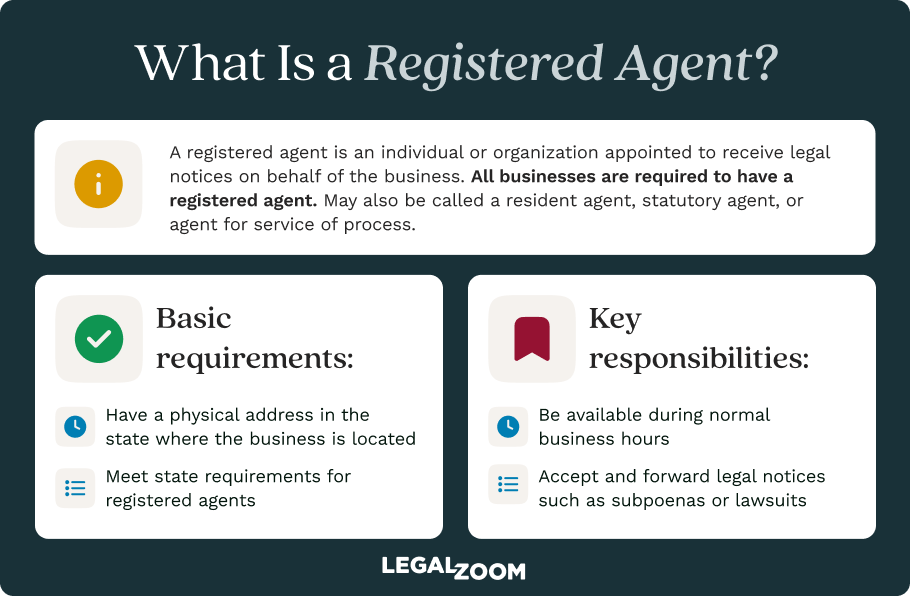
Wisconsin LLC owners must appoint a registered agent. This is someone whom you authorize to receive legal documents and notices on behalf of your LLC. This includes service of process (delivery of a lawsuit), annual report forms, tax forms, and more.
Your registered agent can be a person (you can be your own registered agent or appoint an employee of your LLC), or you can use a registered agent service. However, your Wisconsin registered agent must meet the following criteria:
- Individuals must be Wisconsin residents.
- Entities (or companies) must be registered to transact business in Wisconsin.
- The registered agent must have a physical street address in Wisconsin (not just a P.O. box). This address is called the registered office.
- The registered agent must be on-site and available to accept documents during regular business hours and must forward any documents received to the limited liability company.
While you can be your own registered agent, using a service can help maintain your privacy by keeping your personal address private (an LLC’s registered office address is available to the public). A registered agent service can also handle important legal notices more quickly if you’re often out of town, which helps to ensure important documents don’t get lost in the mail.
LegalZoom offers a registered agent service for $249/year. We’re available at our Green Bay office during regular business hours and will send you a notification as soon as important documents arrive for your LLC. Then, we’ll upload it to your account through a secure online server for you to access from anywhere.
Step 3: Prepare and file articles of organization
Your articles of organization essentially act as a Wisconsin LLC application form. You can fill out a relatively simple online form and submit it through the One Stop Business Portal, or send a paper copy by mail.
To file Wisconsin LLC articles, you’ll need the following information:
- Your business name and principal office address.
- The name, address, and email address of your registered agent.
- The name and address of each organizer, plus the signature of one or more organizers.
- The name of the person completing the document.
- The name, address, email address, and phone number of a contact person.
LLC formation costs $131 online, while submitting the articles by mail costs $145. The standard fee is the same for a foreign LLC and a domestic LLC. You can also pay $25 to expedite the service, which means you’ll be first in line for review. The filing fee (but not the expedited service fee) is waived for students enrolled in a postsecondary institution who are 18 years or older. In this case, file a separate Student Entrepreneur Articles of Organization form.
Once the DFI approves your Wisconsin LLC articles of organization, you’ll receive a certificate. Keep it somewhere safe, you can use that to obtain an employer identification number (EIN), business licenses, and a business bank account.
Step 4: Create an operating agreement
An operating agreement is a document that outlines the way your LLC will conduct business. Wisconsin doesn’t require LLC owners to have an operating agreement, but it is an essential component of your business, especially if you have multiple LLC members.
An operating agreement allows you to clearly define member roles, rights, and responsibilities early on, which can help to prevent disagreements. It can also inform court judgements, should a legal dispute arise. Even if you’re a single-member LLC, an operating agreement can add credibility to your business when you’re dealing with financial institutions or investors and distinguish you from the LLC, which helps to preserve its limited liability status.
A Wisconsin LLC operating agreement can include, but is not limited to, the following:
- A copy of the articles of organization
- Business purpose and operational structure
- LLC members and their contributions
- How profits and losses will be divided
- How the LLC will be managed
- Member/manager rights and responsibilities
- Procedures for admitting new members, as well as outgoing members
- Indemnification and liability clauses
You can draft the agreement yourself or utilize a Wisconsin LLC operating agreement template as a starting point. But it’s always good to seek the advice of a legal professional to avoid any future contingencies in your business. LegalZoom also offers an operating agreement service that covers all the important matters, but can also be customized to meet your LLC’s specific needs. This service is included in our Pro and Premium formation packages.

Step 5: Get an employer identification number
A federal employer identification number is a nine-digit number that the IRS assigns businesses to identify them for tax purposes. You’ll need an EIN if you plan to hire employees, open a business bank account, or file certain types of taxes. The good news is that getting an EIN is free and easy. You can obtain your EIN, also called a federal tax ID number, by mail or through the IRS website. You can also use an online EIN service, such as LegalZoom’s, to guide you through the process. This service is also included in our Pro and Premium business plans.
After formation: Ongoing compliance requirements for Wisconsin LLCs
Open a business bank account
Once you have your EIN, it’s wise to open a business bank account. A separate bank account will help keep your personal and business finances separate, which is important for maintaining liability protection. It also makes expense tracking and tax filing easier, even for a single-member LLC. Many financial institutions and banks will require your EIN, a copy of your articles of organization, and possibly your operating agreement.
Register for state taxes
Wisconsin LLCs are generally taxed as pass-through entities by default. This means that the LLC itself doesn’t pay taxes on its income. Instead, the profits and losses of the business “pass-through” to the personal tax returns of the LLC’s members. However, you can choose to have your LLC taxed as a corporation if that better fits your business. To do so, file an Entity Classification Election form with the IRS.
Wisconsin recognizes federal tax classifications, which means that LLCs that file federal income taxes through the owner’s individual returns will file state income taxes the same way. However, there are other state taxes that the entity itself may need to file, such as sales and use taxes if you plan to sell goods or services.
In this case, your LLC will need to obtain a business tax registration. You can also use the Wisconsin One Stop Business Registration Portal to register your business with the Department of Financial Institutions, the Department of Revenue, and the Department of Workforce Development, all at once. The initial registration fee is $20 and lasts for two years. After that, the renewal fee is $10. If you plan to hire employees, you’ll need to register for employer taxes, such as unemployment insurance and withholding taxes.
Obtain Wisconsin business licenses and permits
There is no general Wisconsin business license. However, depending on your business activities, you may need to obtain permits or licenses, like health department permits, zoning permits, home occupation permits, professional licenses, and more. If your LLC sells goods, Wisconsin also requires a sales tax permit, which is included in your business tax registration and will renew with it.
Certain Wisconsin businesses, from hotels, campgrounds, fitness centers, and food retailers to plant nurseries and cheesemakers, also need state business licenses. The Wisconsin Department of Agriculture, Trade and Consumer Protection has a helpful A to Z list of licenses and permits, which can help guide your search.
You might also need local permits. For example, if you run a restaurant, rent vehicles, or provide lodging in Milwaukee, you’ll need a permit. Be sure to check with the relevant state and local agencies. LegalZoom also offers a business license and permit service to help you locate everything your business will need.
Building a business is enough work as it is. We'll help you start your LLC with confidence.

Keep up with Wisconsin annual reports
All Wisconsin LLCs are required to file an annual report, which updates the state on your LLC’s current business address, registered agent, and any other key information. The due date for your annual report is the last day of the calendar quarter in which you formed your LLC.
In other words, your report is due at the end of one of these quarters.
- Quarter 1: January 1 to March 31
- Quarter 2: April 1 to June 30
- Quarter 3: July 1 to September 30
- Quarter 4: October 1 to December 31
So, if you formed your business in February, your annual report is due by March 31 every year. The filing fee for the annual report is $40 by mail or $25 if you file online through the Wisconsin One Stop Business Portal.
The cost of forming an LLC in Wisconsin
Forming an LLC in Wisconsin costs at least $130, which is the fee to file articles of organization or a foreign LLC registration. Here’s a breakdown of what you can expect.
- LLC formation: $131 to file articles of organization online ($145 by mail)
- Name reservation: $15 (optional)
- Registered agent service: $0–$300
- Operating agreement: $0–$500 or more for an attorney drafted agreement
- EIN filing: EIN filing through the Internal Revenue Service is free
- Business tax registration: $20
Total estimated cost: Depending on whether you choose to use professional services, the total cost to start an LLC in Wisconsin ranges from $131 to $980. You’ll also need to pay $40 each year to file your annual report and $10 every two years to renew your business tax registration (which includes several tax permits).
How to start your Wisconsin LLC with LegalZoom
Business owners are busy people. That’s why we offer services to simplify the process of forming your Wisconsin LLC. We’ll guide you through each step, from choosing your LLC’s name to filing your articles of organization.
With LegalZoom, you can also get additional services like registered agent support, EIN filing, and assistance with drafting your operating agreement. Take the guesswork out of LLC formation so you can focus on running your business.
Find the right state to form an LLC
Find the right state to form an LLC
Every state has different rules, costs, and considerations for LLC formation.


LegalZoom can help you file your state's formation paperwork for as little as $0 + state filing fees.

Wisconsin LLC registration FAQs
What are some common mistakes to avoid when registering a Wisconsin LLC?
Here are a few common mistakes small business owners should avoid:
- Mixing personal and business finances. When you use personal funds for business reasons or vice versa, you risk piercing the corporate veil. In turn, you could become personally responsible for business debts and liabilities.
- Not understanding registered agent qualification requirements. Some business owners choose to be their own registered agent without understanding what the role entails. If you're not available to receive service of process, you could miss a summons and lose an opportunity to defend yourself in court.
- Forgetting to file an annual report. LLCs that consecutively fail to file their annual reports risk the state dissolving their business.
- Skipping the operating agreement. An operating agreement saves you from future unnecessary hassles by allowing you to establish clear guidelines for how your business operates, member rights and responsibilities, voting procedures, and profit distributions from the start.
How much does it cost to start an LLC in Wisconsin?
It costs at least $131 to form a Wisconsin LLC, which is the online filing fee for your formation documents. However, the full cost depends on several factors, such as your operating expenses, tax registration obligations, license and permit needs, and whether or not you hired a professional to be your registered agent or draft your operating agreement.
How long does it take to register a Wisconsin LLC?
It can take anywhere from one to seven business days to register your LLC with the Wisconsin Department of Financial Institutions. That said, it could take more time during busy parts of the year, especially if you file your formation or registration documents by mail.
Does Wisconsin require an annual report for LLCs?
Yes, Wisconsin requires all LLCs to file an annual report by the last day of the calendar quarter in which they originally formed their business. It costs $25 to file an annual report online and $40 by mail.
Do Wisconsin LLCs pay state taxes?
Yes, Wisconsin LLCs generally pay taxes, such as sales, excise, and withholding taxes, at the entity level depending on their business activities and structure. In terms of income taxes, LLCs pass their income and expenses through to their owners’ individual tax returns by default, but can elect to be taxed at the entity level if they choose.
Can I be my own registered agent in Wisconsin?
Yes, you can be your own registered agent in Wisconsin as long as you're a resident of the state, have a physical business address in Wisconsin, and will be available to receive important legal and official mail at that address during regular business hours. If you do choose to act as your own agent, keep in mind that your business address will be available to the public.
Many business owners will choose to work with an outside registered agent service for the privacy, flexibility, and security of knowing that a professional is handling the role for them.
Carolyn Albee and Rudri Bhatt Patel contributed to this article.
'%20/%3e%3c/svg%3e)

'%3e%3cpath%20fill-rule='evenodd'%20clip-rule='evenodd'%20d='M9.31239%2025.5316H13.0679V14.1032H9.31239V25.5316ZM11.1913%208.46875C9.93945%208.46875%209%209.25086%209%2010.505C9%2011.5995%209.78211%2012.5389%2011.1913%2012.5389C12.6005%2012.5389%2013.3826%2011.5995%2013.3826%2010.505C13.3826%209.4082%2012.6005%208.46875%2011.1913%208.46875ZM27%2018.9577V25.5316H23.2445V19.4275C23.2445%2017.8609%2022.6174%2016.7664%2021.3679%2016.7664C20.2711%2016.7664%2019.644%2017.5463%2019.3316%2018.1756C19.1743%2018.488%2019.1743%2018.8004%2019.1743%2019.1128V25.5316H15.4165V13.9458H19.1743V15.5123C19.644%2014.7302%2020.5835%2013.6357%2022.6174%2013.6357C25.1234%2013.7908%2027%2015.3573%2027%2018.9577Z'%20fill='white'/%3e%3c/g%3e%3cdefs%3e%3cclipPath%20id='clip0_952_9489'%3e%3crect%20width='18'%20height='18'%20fill='white'%20transform='translate(9%208)'/%3e%3c/clipPath%3e%3c/defs%3e%3c/svg%3e)